





1. Core Components of a LiFePO4 Battery
| A complete solution is more than just cells; it's a carefully engineered system. | ||
| Component | Description | Function |
| 1. LiFePO4 Cells | The fundamental building blocks. Typically 3.2V nominal per cell. | Store electrical energy. Renowned for their flat voltage discharge curve and thermal stability. |
| 2. Battery Management System (BMS) | The "Brain" of the pack. A critical electronic circuit board. | - Protection: Prevents over-charge, over-discharge, over-current, and short circuits. - Cell Balancing: Ensures all cells charge and discharge evenly, maximizing pack life. - Monitoring: Tracks State of Charge (SoC), voltage, current, and temperature. - Communication: Provides data via interfaces like CAN Bus, RS485, or Bluetooth (BMS with Bluetooth is a game-changer for user monitoring). |
| 3. Pack Structure & Housing | The physical enclosure. | Provides mechanical strength, protects from environmental factors (dust, water - IP ratings), and manages thermal dissipation. |
| 4. Thermal Management System | (Optional for many applications, crucial for high-power) | Maintains optimal temperature range. Can be passive (fins) or active (fans, liquid cooling) for extreme conditions. |
| 5. Terminals & Wiring | High-quality, robust connectors and busbars. | Ensures safe and efficient current flow within the pack and to the external system |
2. Key Advantages of the LiFePO4 Battery Solution
This is why you choose LiFePO4 Battery.
- Exceptional Safety: The P-O bond in the cathode material is very strong, making it highly resistant to thermal runaway (fire/explosion). It is inherently safer than NMC (Lithium Nickel Manganese Cobalt Oxide) or LCO (Lithium Cobalt Oxide) chemistries.
- Long Cycle Life: Typically 2,000 - 7,000 cycles to 80% of original capacity. This translates to 5-15 years of daily use, far outperforming lead-acid (300-500 cycles) and other lithium types.
- High Efficiency & Stable Voltage: Charge/discharge efficiency is often >95%. The voltage remains very stable for most of the discharge cycle, providing consistent power to your devices.
- Maintenance-Free: No need for watering, equalization charges, or specific storage charging like lead-acid batteries.
- Environmentally Friendly: Contains no heavy metals like cobalt (which has ethical mining concerns), making it a greener choice.
- Lightweight & Compact: Significantly higher energy density than lead-acid, resulting in a much smaller and lighter pack for the same capacity.
3. Common Applications
LiFePO4 Battery solutions are versatile and are used in:
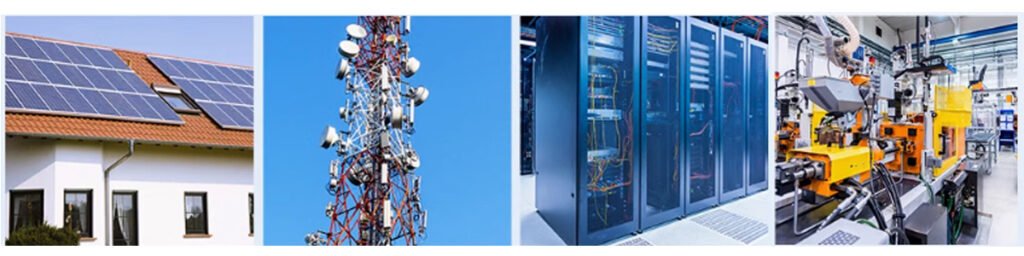
- Solar Energy Storage: For on-grid and off-grid residential & commercial systems.
- Recreational Vehicles (RVs) & Marine: Powering appliances, lighting, and electronics.
- Electric Vehicles (EVs): Especially golf carts, scooters, and low-speed vehicles where safety and cycle life are critical.
- Uninterruptible Power Supplies (UPS): Replacing VRLA batteries for longer runtime and reliability.
- Portable Power Stations: The core of popular consumer-grade solar generators.
- Telecom Base Stations & Industrial Backup Power.